
Gurgaon Circle Rate Hike 2026: Impact On Buyers And Sellers
Got asked about this a lot this month, honestly, the same question every time. What’s this circle rate hike everyone’s talking about, and does it actually change anything if someone’s buying or selling right now. Let me just break it down simply.
What Circle Rate Actually Means
Circle rate is basically the lowest price the government fixes for a property in a given area, could be a home, a shop, or just a plot of land. This number only matters for registration purposes. It’s not the price you and the seller actually agree on between yourselves.
- You cannot register a sale below this rate, even if you paid less
- The sale value must match or go above the circle rate
- Stamp duty gets calculated on whichever is higher, circle rate or actual sale value
- Banks also use this rate when checking a property before giving a loan
What Changed In 2026
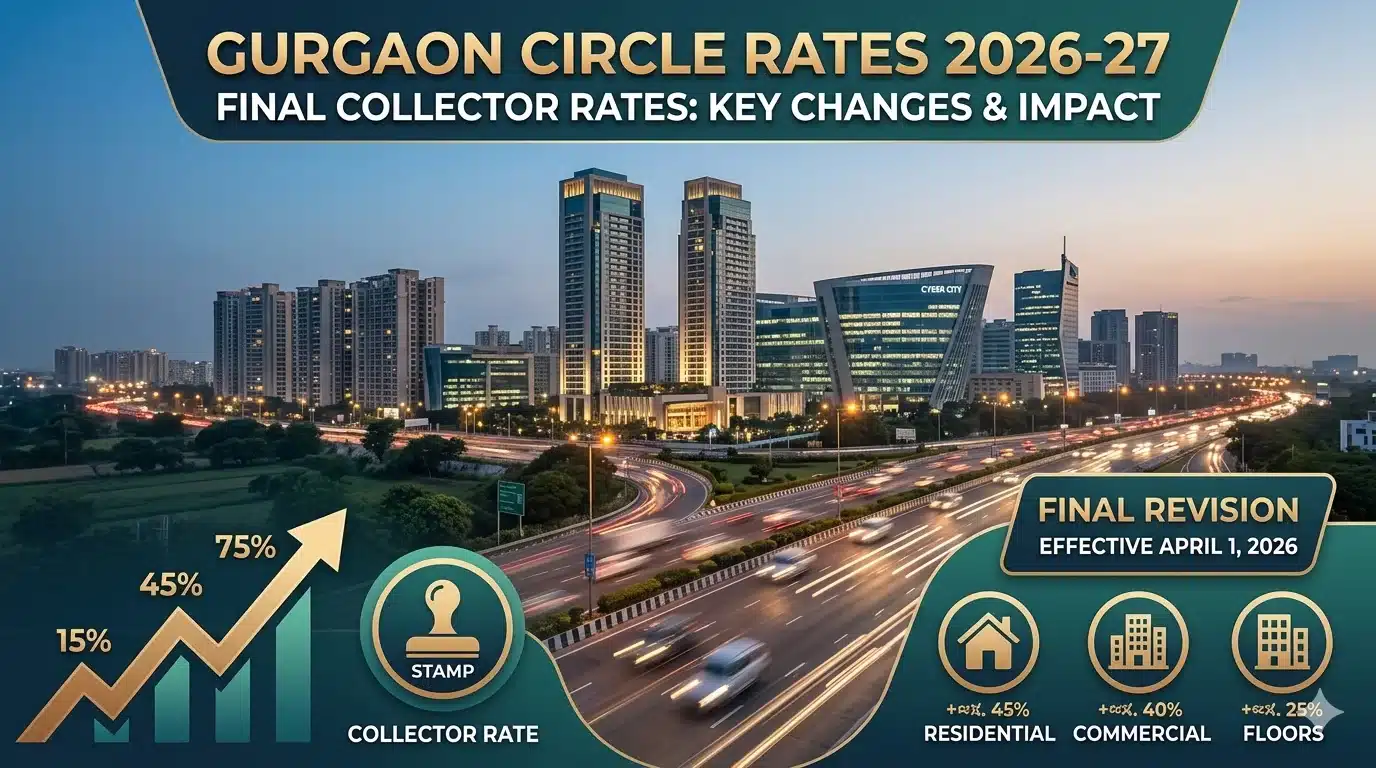
The new rates came into effect from April 1, 2026. This is confirmed by an official government document on the Urban Local Bodies Haryana portal, and by a public statement from the Deputy Commissioner of Gurugram.
- Average increase across the district sits between 15% and 30%
- About 11% of the district saw a jump as high as 75%
- Around 51% of the area saw no change at all
- Corridors like Dwarka Expressway and Golf Course Extension Road saw steeper increases
So this was not one flat number applied everywhere. Some sectors barely moved. Others jumped a lot.
Why The Government Did This
For years, the official circle rate stayed lower than what people actually paid in the market. Many buyers would show a lower price on paper just to save on tax. This gap between paper value and real value created a problem for the government too, since it lost stamp duty income and tax collection stayed lower than it should.
- The hike is meant to close that gap between official rate and market rate
- It reduces the chance of under-reporting a sale price
- It also brings more transparency into how deals get recorded
- Growth corridors that were undervalued for years finally got a bigger correction
Impact On Buyers
This part matters most for anyone planning to buy soon.
- Upfront registration cost goes up, since stamp duty is based on the new rate
- Total extra cost from registration and stamp duty can reach 6% to 8% of the revised value
- First time buyers may need a slightly bigger loan or higher down payment
- Premium segment buyers feel this more, since they already pay close to or above the circle rate
For a lot of people, this pushes the total budget higher than what they had originally planned. Someone eyeing a home in Sector 62 or Sector 84 for example needs to now check the fresh registration cost before locking in a budget.
Impact On Sellers
Sellers feel this hike in a different way, mostly through tax.
- Capital gains tax gets calculated on whichever is higher, sale price or circle rate
- If a seller’s actual sale price is lower than the new circle rate, tax gets applied on the higher number anyway
- This can increase the tax bill for someone selling in a sector where rates jumped sharply
- Sellers in established areas like DLF Phases or Golf Course Road may see limited actual impact, since market price there was already close to or above government rate
Investors and resale buyers should also know this hike can affect their profit calculation when they eventually sell.
Sector Wise Impact, What’s Actually Happening
Different parts of Gurgaon are reacting differently to this change.
- DLF Phases, Sushant Lok, Golf Course Road, Golf Course Extension Road, these are mature, already premium areas, so the hike here follows a slower, steady pace
- New Gurgaon, Sectors 81 to 95, and the Dwarka Expressway belt, saw sharper jumps since these areas were catching up on real value
- Commercial belts and industrial zones also saw noticeable revisions this time
- Areas where market price already exceeded the circle rate feel less real pressure, since stamp duty was already based on the higher, actual transaction value
Worth knowing, in areas where the market rate is already higher than the circle rate, both stamp duty and loan value follow the market price anyway. So the actual pain from this hike sits mostly in sectors where the old circle rate was clearly lower than what people were actually paying.
What Buyers And Sellers Should Actually Do Now
A few practical steps help here, no matter which side of the deal you’re on.
- Check the exact sector rate on property.ulbharyana.gov.in before finalising a budget
- Factor stamp duty and registration into your total cost, not just the base property price
- If you’re selling below the new circle rate, speak to a tax advisor about capital gains implications
- If buying in a growth corridor, treat the hike as a signal, it often means the government sees real value building up there
At True Asset Consultancy, we tell clients this hike is not just an extra cost, it’s also useful information. Sectors that saw the sharpest jump are usually the ones where real infrastructure and demand have grown the fastest. Before you finalise any deal, always confirm the current rate directly, don’t go off numbers from last year.