Joint Development Agreement: What Landowners and Buyers Should Know
Say a builder walks up to a family that owns an old plot and offers them a deal. You give us the land, we build, and you get a share of what’s built. That’s a joint development agreement. It’s how many projects get started, and it affects two groups: the landowner who signs it, and the buyer who later buys a flat in the project. We’re TrueAsset Consultancy, and we’re not lawyers or tax advisors, so here’s a plain guide with real rules and real risks.
What a Joint Development Agreement Really Is
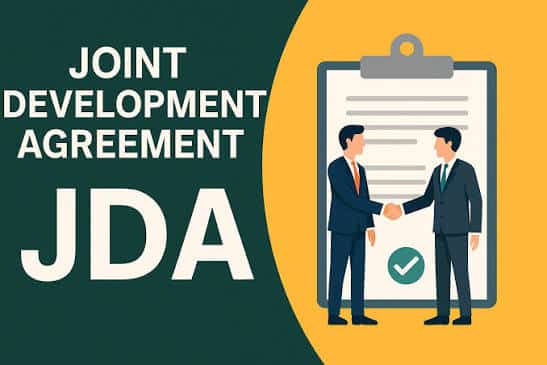
A joint development agreement, or JDA, is a contract between a landowner and a builder. The landowner brings the land. The builder brings the money, the building work and the sales. Instead of paying for the land upfront, the builder shares the finished project with the owner.
The land isn’t sold in the usual way. Development rights pass to the builder as the agreement says, and ownership stays a separate question until units are handed over.
Area Sharing or Revenue Sharing: Which One Fits
| Area sharing | Revenue sharing | |
| What the owner gets | A fixed part of the built area, like specific flats | A percentage of the sale money |
| Who sells | The owner sells their own flats | The builder sells everything |
| Risk | Owner carries sales risk | Owner depends on the builder’s sales |
| Tax timing | Capital gains usually come at completion | Depends on the structure |
Many deals mix both. Residential projects most often use area sharing.
The Landowner’s Side: Share, Tax and GST
- Typical share: Landowners usually get about 25% to 50%, depending on location and how much can be built
- Capital gains tax: For an individual or HUF with a registered agreement, tax is pushed to the year the completion certificate is issued, not the year you sign. This is Section 45(5A), and one site says the new Income-tax Act, 2025 calls it Section 67(14).
- GST: The developer pays 18% GST on the development rights under the reverse charge system, and the landowner doesn’t directly bear it in a well-built deal
- Registration matters: A registered agreement is the ticket to the tax benefit. A simple MOU isn’t enough.
Don’t treat the tax rule as a free pass. If you sell your flats earlier, or the deal isn’t set up properly, the benefit can go. Talk to a tax advisor before you sign.
The Buyer’s Side: Why a JDA Project Needs Extra Checking
If you’re buying a flat in a JDA project, you’re really buying from two parties at once. The builder and the landowner both have a stake. So you need to see who owns what.
- Who is selling your flat, the builder or the landowner?
- Is the land title clean and in the landowner’s name?
- Does the builder have the right to build and sell, under a registered agreement?
- Are there pending disputes between them?
At True Asset Consultancy, we tell buyers that a good project has clear answers to all four. A project with fuzzy answers should make you slow down.
The RERA Twist: Landowners Can Become Promoters Too
Under RERA, a landowner who gets flats to sell can be treated as a promoter alongside the builder. That means buyers of the owner’s flats may look to the owner if something goes wrong.
For landowners, this adds responsibility. For buyers, it adds a second party to hold to account. Either way, check the project’s RERA page. It should name the people behind the project and the land.
A Simple Example: 40% for the Owner
Here’s a made-up example to show how it works. A builder builds 100 flats on a landowner’s plot.
| Landowner | Builder | |
| Share | 40% | 60% |
| Flats | 40 | 60 |
| Who sells them | The owner | The builder |
| Tax event for the owner | When the completion certificate comes | Builder’s own business income |
If the owner sells 10 of those flats before the building is complete, the tax picture can change. That’s why advice before signing matters.
Mistakes That Hurt Both Sides
- Signing a vague MOU and calling it a JDA
- Not registering the agreement
- Giving the builder a power of attorney that’s too broad
- Not writing down who owns which flats, floor by floor
- Skipping penalties for delays
- Ignoring the RERA registration
- Selling units before completion without checking the tax effect
A Checklist Before You Sign or Buy
If you’re a landowner
- Get a lawyer and a tax advisor involved before you sign
- Register the agreement
- Define your share by flat number or area, in writing
- Check the builder’s earlier projects and RERA record
- Add dates, penalties and exit terms
If you’re a buyer
- Check the RERA page for the project and the landowner’s name
- Ask to see the registered JDA
- Check the title chain and approved plans
- Confirm who sells your specific flat
- Keep every payment receipt
We go through these with buyers at True Asset Consultancy before a token changes hands.
FAQs
When does a landowner pay capital gains tax in a joint development agreement?
For an individual or HUF with a registered agreement, usually in the year the completion certificate is issued. Not when you sign. Check your case with a tax advisor.
Who pays GST on a JDA?
The developer normally pays 18% GST on the development rights under the reverse charge system. The landowner usually doesn’t pay it directly.
What share does a landowner usually get?
About 25% to 50% of the built area. The exact share depends on the land’s location and how much can be built.
Is it safe for a buyer to buy in a JDA project?
It can be, if the papers are clean. Check the RERA page, the title and the registered agreement. Make sure you know who’s selling your flat.
Do I need a registered agreement?
Yes. A registered agreement is needed for the tax benefit, and it protects both sides. A simple MOU isn’t enough. Need help checking a project’s papers? Call TrueAsset Consultancy and we’ll go through them with you.