
Supply Overhang Risk in Gurgaon
Gurgaon’s luxury housing market looks strong from the outside. Projects sell out in days, prices keep going up. There’s a diverse story underneath, nevertheless, and it doesn’t prove up in any of the sold-out flags.
What Supply Overhang Means
Supply overhang isn’t a complicated idea really. There’s just more unsold housing sitting around than buyers can soak up in a reasonable amount of time. Prices tend to stop climbing so fast once that happens, and sellers lose a bit of their leverage.
- Unsold luxury inventory in Gurgaon is now close to 18,000 units
- That is a jump of 29 percent from about 14,000 units just six months earlier
- Official data shows 13 months of unsold stock citywide, which sounds fine on its own
Why the Real Number Might Be Worse
Here is the part that gets missed a lot. A large chunk of unsold housing in Gurgaon is held by traders and investors, not regular buyers waiting to move in. Some estimates put that trader-held share at around 60 percent of total stock. Once you take that inactive stock out of the picture, the real unsold inventory in some sectors works out closer to 30 to 46 months. That is a very different number from the healthy-looking 13 months everyone quotes.
| Measure | Official Figure | Adjusted Estimate |
| Citywide unsold inventory | 13 months | 30-46 months in some sectors |
| Luxury unsold units | Around 18,000 units | Rising fast, up 29% in 6 months |
| Trader-held stock share | Not usually reported | Around 60% of total stock |
Prices Up, Sales Down
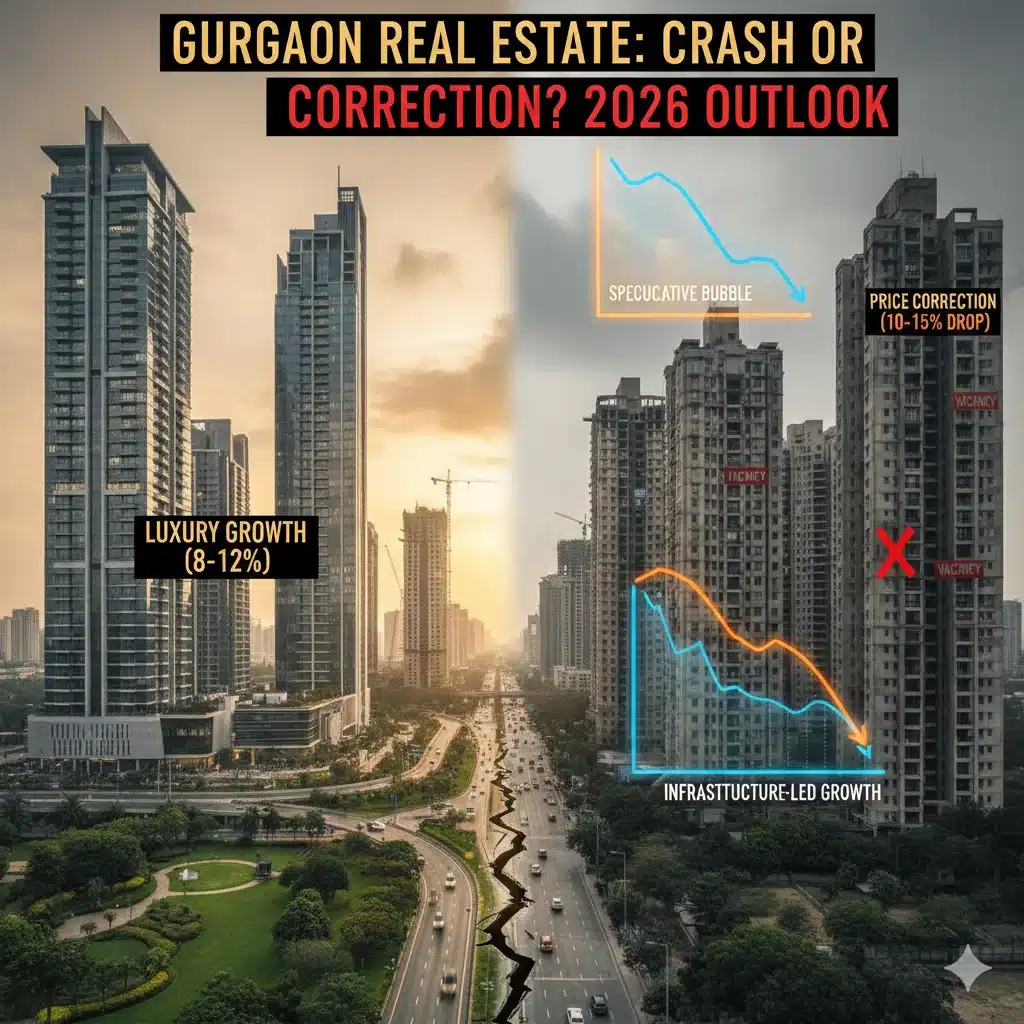
This is the strangest part of the current market. In early 2026, developers launched over 28 luxury projects. Prices jumped around 27 percent year on year. But actual housing sales fell by 14 percent in the same period. Prices going up while sales go down is not normal. In a healthy market, both usually move together.
A few reasons this is happening right now:
- Buyers are getting more selective about which projects they trust
- Many “sold out” numbers include bulk sales to traders and brokers, not real end users
- New launches keep adding supply even as actual demand slows down
What This Could Mean Going Forward
If a good number of early investors decide to exit over the next two to four years, a lot of that trader-held stock could hit the resale market at once. That would put pressure on prices, especially in sectors where end-user demand is thinner than the sold-out headlines suggest.
This does not look like the 2008 crash setup though. RERA rules bring more transparency now than existed back then. Most premium buyers today are also using less debt, so a wave of forced, distressed selling is less likely. Still, this is not risk-free either. It is closer to a slow supply correction than a sudden crash.
At True Asset Consultancy, we tell buyers to check actual absorption numbers for a sector, not just the launch price or the sold-out badge on a brochure. A project selling fast to traders is not the same as a project selling fast to families who actually plan to live there.
FAQs
What is supply overhang in real estate?
It means unsold housing stock is piling up faster than buyers can absorb it. When that happens, price growth usually slows down or reverses.
How much unsold luxury housing does Gurgaon have right now?
Close to 18,000 units, up 29 percent from about 14,000 units just six months earlier.
Is Gurgaon heading for a price crash like 2008?
Most experts say no. RERA rules, lower buyer debt levels, and continued end-user demand make a sharp crash unlikely, though a slow correction in oversupplied sectors is possible.